- Services
- Laparoscopic surgery
- Abdominal wall reconstruction
- Hernia surgery
- Laser surgery for anorectal diseases
- Complex gastrointestinal surgeries
- Thyroid surgeries
- Diabetic foot surgery
- Reconstruction surgery
- Cyst & lipoma surgery
- Pancreatic diseases & associated surgery
- Breast Cancer Surgeries
- Laser Treatment For Varicose Veins (EVLT)
- Onco Surgery
Laparoscopic Surgery
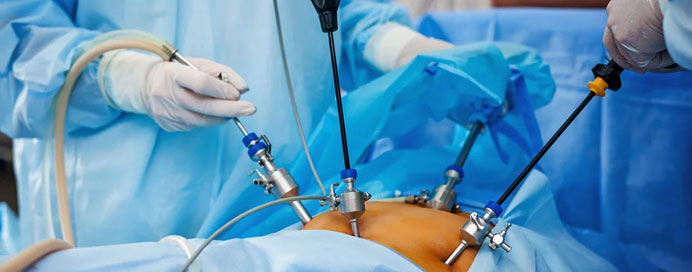
Laparoscopic surgery is a minimally invasive surgical technique performed through small incisions using a camera and specialized instruments. It allows the surgeon to perform a wide range of abdominal procedures with less tissue damage compared to conventional open surgery.
What is Laparoscopic Surgery?
During laparoscopic surgery, a small camera called a laparoscope is inserted through a tiny incision to provide a clear view of the internal organs. Additional small incisions are used to introduce surgical instruments. This technique enables precise surgical treatment while minimizing disruption to surrounding tissues.
- Small incisions with minimal tissue trauma
- Reduced postoperative pain and discomfort
- Shorter hospital stay and faster recovery
- Smaller scars compared with open surgery
Common Laparoscopic Procedures
Laparoscopic techniques can be used for several abdominal and gastrointestinal conditions. The choice of procedure depends on the patient's condition, medical history and surgical requirements.
- Laparoscopic hernia repair
- Laparoscopic gallbladder surgery
- Laparoscopic abdominal and gastrointestinal procedures
- Minimally invasive treatment of selected abdominal conditions
Benefits of Laparoscopic Surgery
Laparoscopic surgery offers the advantages of smaller surgical incisions, reduced postoperative discomfort and an earlier return to routine activities in appropriately selected patients. A detailed evaluation is performed before surgery to determine whether a minimally invasive approach is suitable.